Most rooftop solar installations are scheduled after a site assessment, permit review, and equipment order are complete, so planning several weeks ahead gives the smoothest sequence. Roof measurements, rafter spacing checks, and utility interconnection paperwork all happen before crews arrive. Our office keeps you updated at each stage so the installation date is confirmed rather than estimated.
Residential Solar Installation in Fair Lawn, NJ
Residential solar installation covers the design, mounting, and grid interconnection of rooftop or ground-based panel arrays for homeowners tired of rising utility bills. Many Fair Lawn houses have older asphalt shingle roofs and partial tree shading, so accurate load calculations and string layout planning matter. Our 2026 schedule is open for spring and summer builds. The team at Fair Lawn Solar Panel Installations handles permitting, flashing, and inverter setup start to finish.
Call for A Free EstimateWe want to hear from you
Send us your details and we'll get back to you to schedule a time to talk.
What Our Residential Solar Installation Service Includes
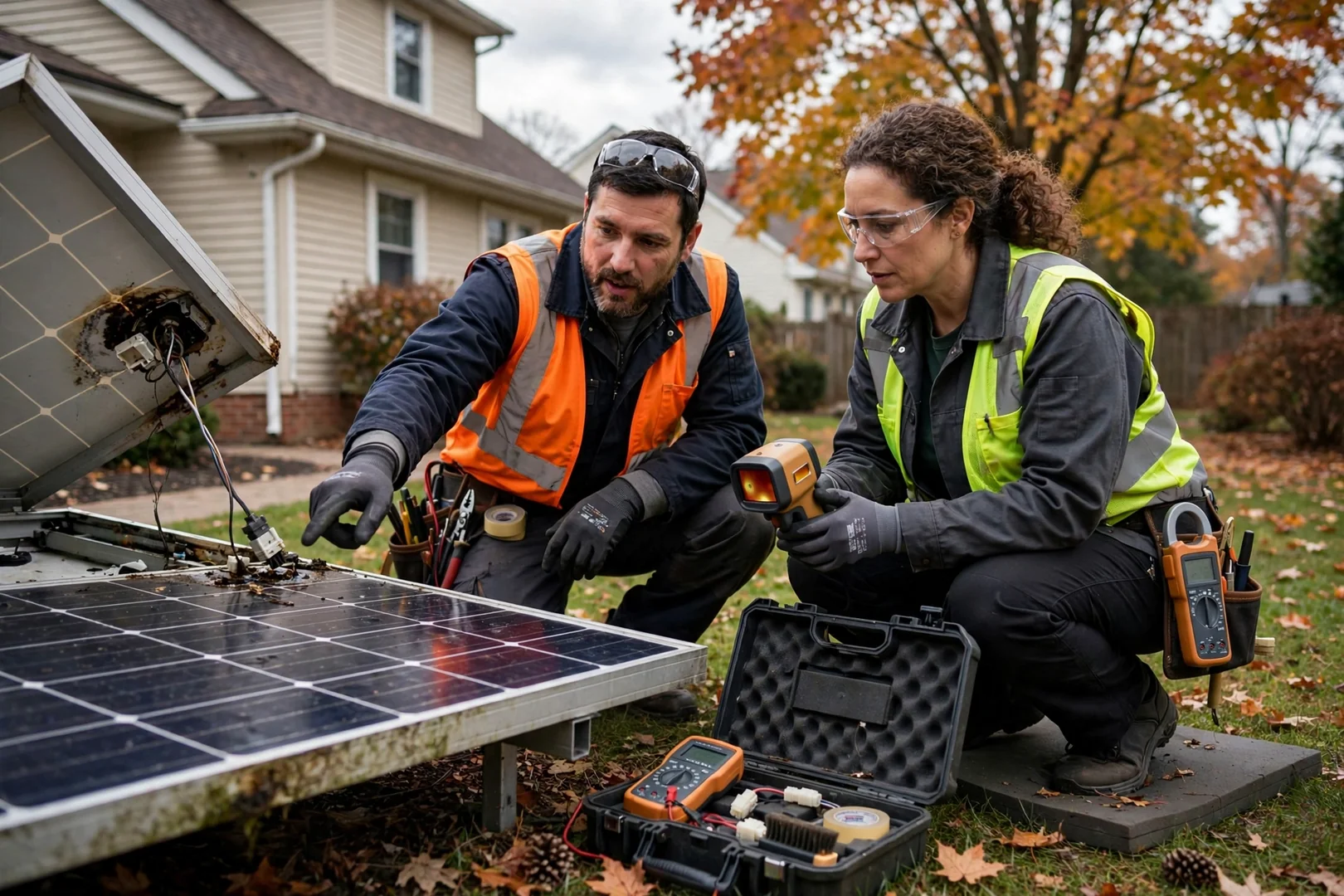
Residential solar installation is the process of designing, mounting, and wiring a photovoltaic array on a home so it produces usable electricity, and at Fair Lawn Solar Panel Installations it includes site assessment, roof structure review, racking installation, inverter setup, and utility interconnection across Fair Lawn properties. Every project starts with a shade study and production estimate, since mature street trees and mixed roof pitches are common on older Fair Lawn blocks. Technicians check rafter spacing, decking condition, and existing flashing before a single rail goes down. That step prevents leaks later. Panels are then set on sealed standoffs, bonded for grounding, and connected to a string or microinverter configuration matched to your panel layout and electrical service capacity.
Homeowners usually reach out because bills keep climbing or because an earlier system never performed the way it was promised. Our 2026 approach leans heavily on diagnosis first: we look for undersized service panels, poorly planned string lengths, aging breakers, and roof areas that would need replacement within a few years. Multi-unit buildings and small commercial rooftops in the area get the same structured review, adapted for ballasted racking or larger inverter banks. You receive a written estimate that lists equipment, production expectations, and permit steps in plain language. After commissioning, we complete a post-job walkthrough, confirm monitoring is reporting correctly, and explain what normal output looks like through the shorter winter days.
Related Solar Services
Signs Your Home Needs Solar
What Signs Mean Your Fair Lawn Home Needs Residential Solar Installation?
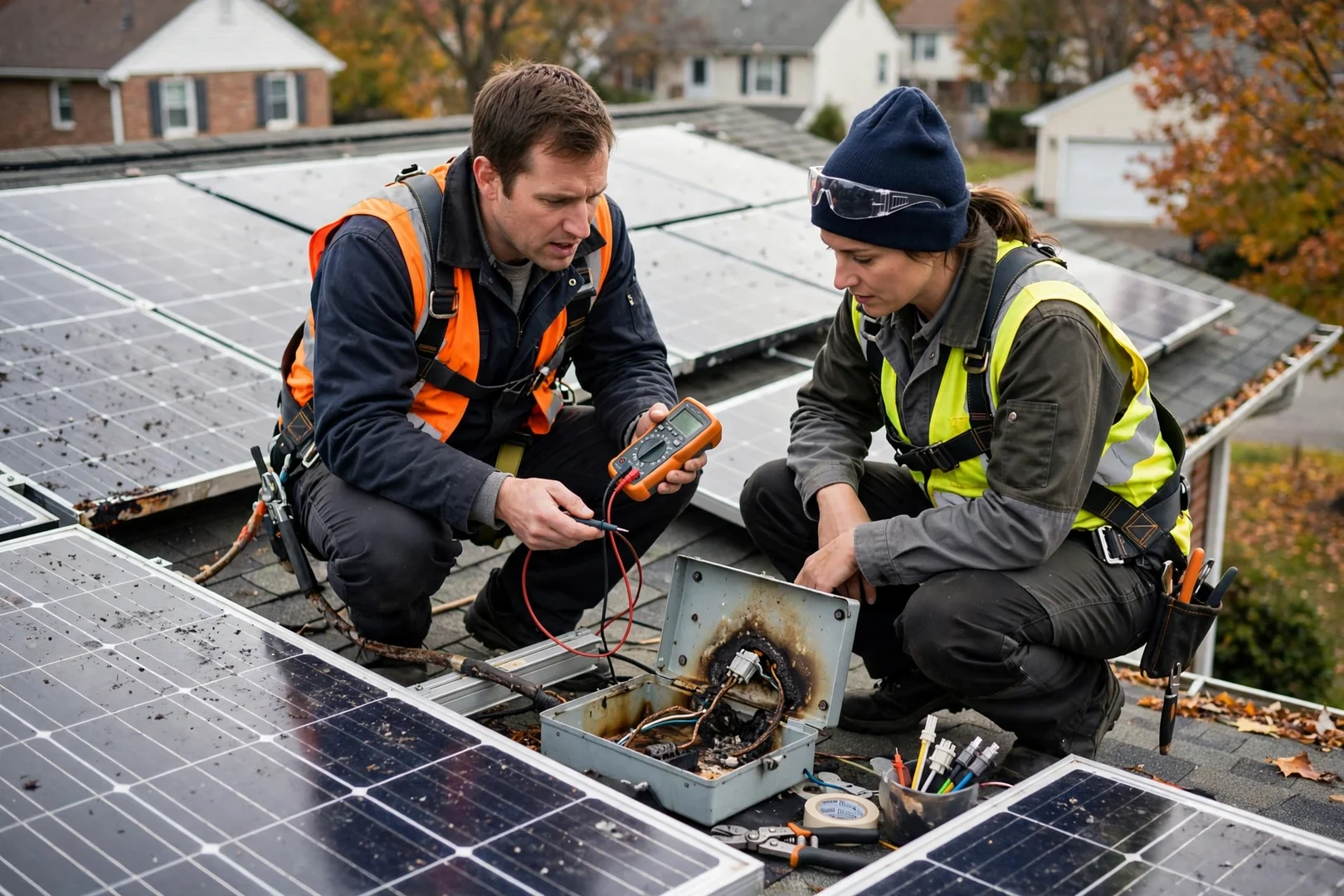
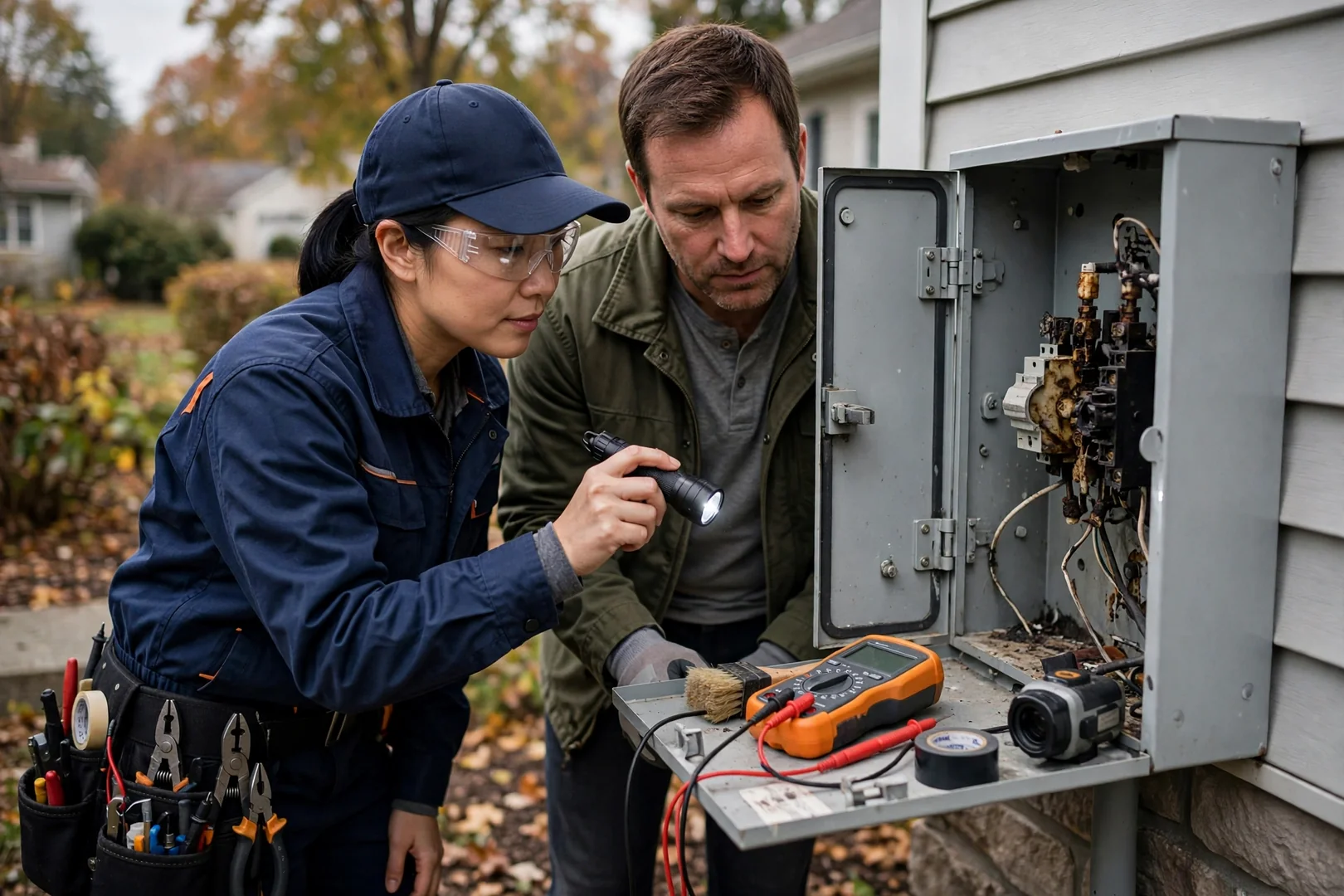
Rising utility bills, an all-electric addition, aging roof-mounted equipment, and a home that draws heavily on grid power during summer cooling season are the clearest signs a Fair Lawn home is ready for residential solar installation. Homeowners often notice summer electric statements climbing well past their winter baseline once central air runs daily. Others already have an older array and see inverter fault codes, dead strings, reduced kilowatt-hour output on the monitoring app, or discolored panel cells that point to hot spots and delamination. Roof-side symptoms matter too: loose mounting hardware, degraded lag bolt sealant, and staining near penetrations can lead to decking moisture before anyone notices from inside. Small problems grow quietly. Through 2026, more Fair Lawn owners are also adding heat pumps and EV chargers, which pushes existing service panels close to capacity and makes load planning part of the conversation. A properly engineered installation, with correct array sizing, flashing detail, and grounding, resolves those performance and moisture concerns while giving your household predictable production data to review each month.
Call Us On: (551) 766-1497
- Residential Solar Installation FAQs -
Residential Solar Installation FAQs for Fair Lawn Homeowners
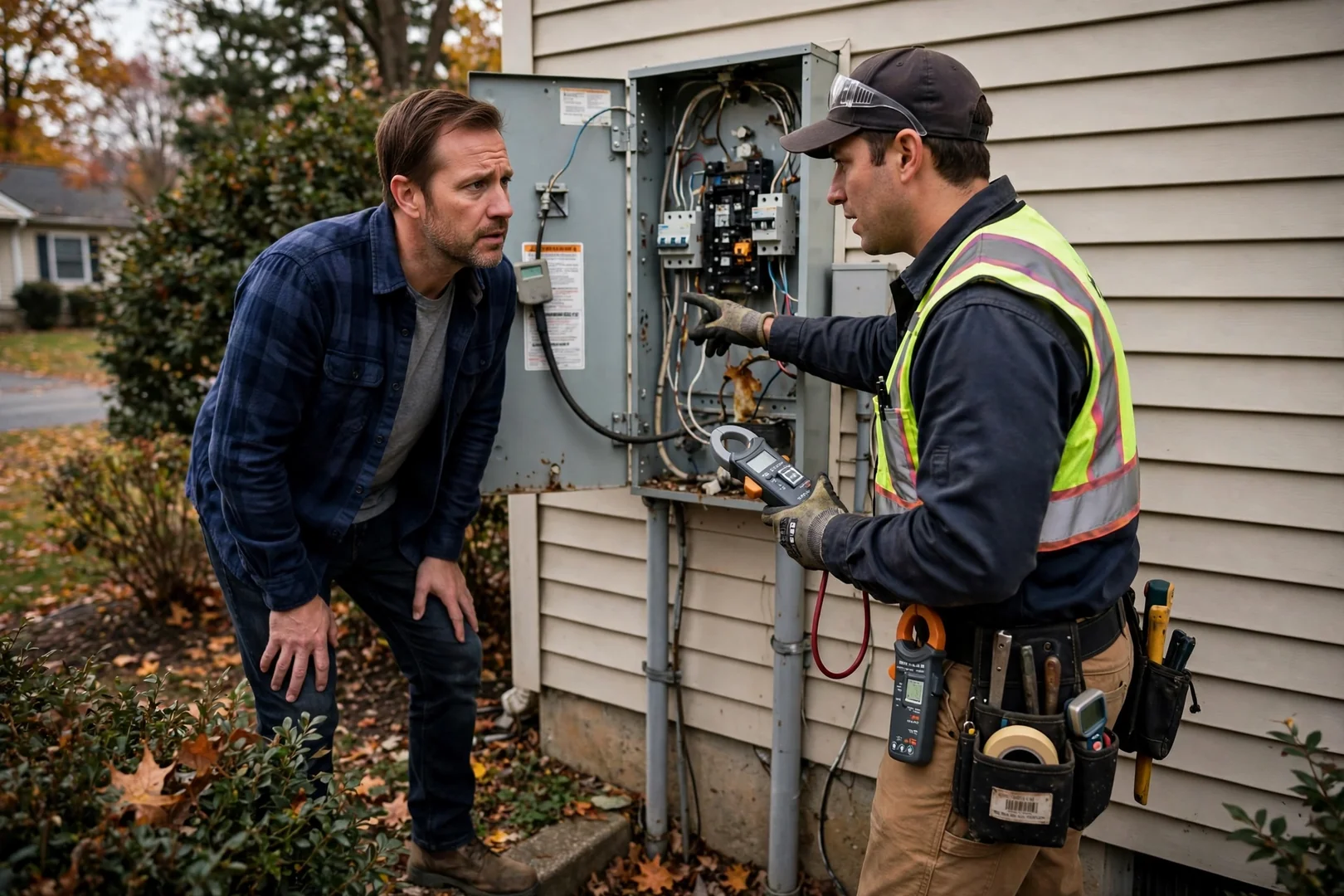
Click Me to Call: (551) 766-1497A residential installation includes roof mounting hardware, flashing and sealing at each penetration, racking rails, the panel array, inverter or microinverters, conduit runs, and the main service panel connection. Monitoring setup and system commissioning are handled before we consider the job finished. You also receive a post-job walkthrough covering shutdown procedures and monitoring access.
Preparation is light: clear driveway space for the equipment truck, move vehicles away from the roof edge, and keep attic access reachable for conduit and wiring work. If your electrical panel is in a finished basement or garage, clearing a few feet around it helps the interconnection go faster. Our technicians handle protective coverings, ladder staging, and cleanup themselves.
Cost differences between Fair Lawn homes come down to roof pitch and material, array size in kilowatts, electrical panel capacity, and whether a service upgrade or new subpanel is needed. Older homes with 100-amp service or slate and cedar roofing typically require additional labor and hardware. Every quote we issue is a written estimate built from an on-site assessment, not a phone guess.
Panels continue producing in cold weather, and cool temperatures actually improve module efficiency, though snow cover and shading reduce output temporarily. During 2026 site visits in Fair Lawn we run a shade analysis for mature oaks and neighboring rooflines, then adjust array layout, tilt, or use microinverters to limit losses from partial shading. Snow generally slides off pitched arrays as the modules warm.
How Much Does Residential Solar Installation Cost in Fair Lawn?
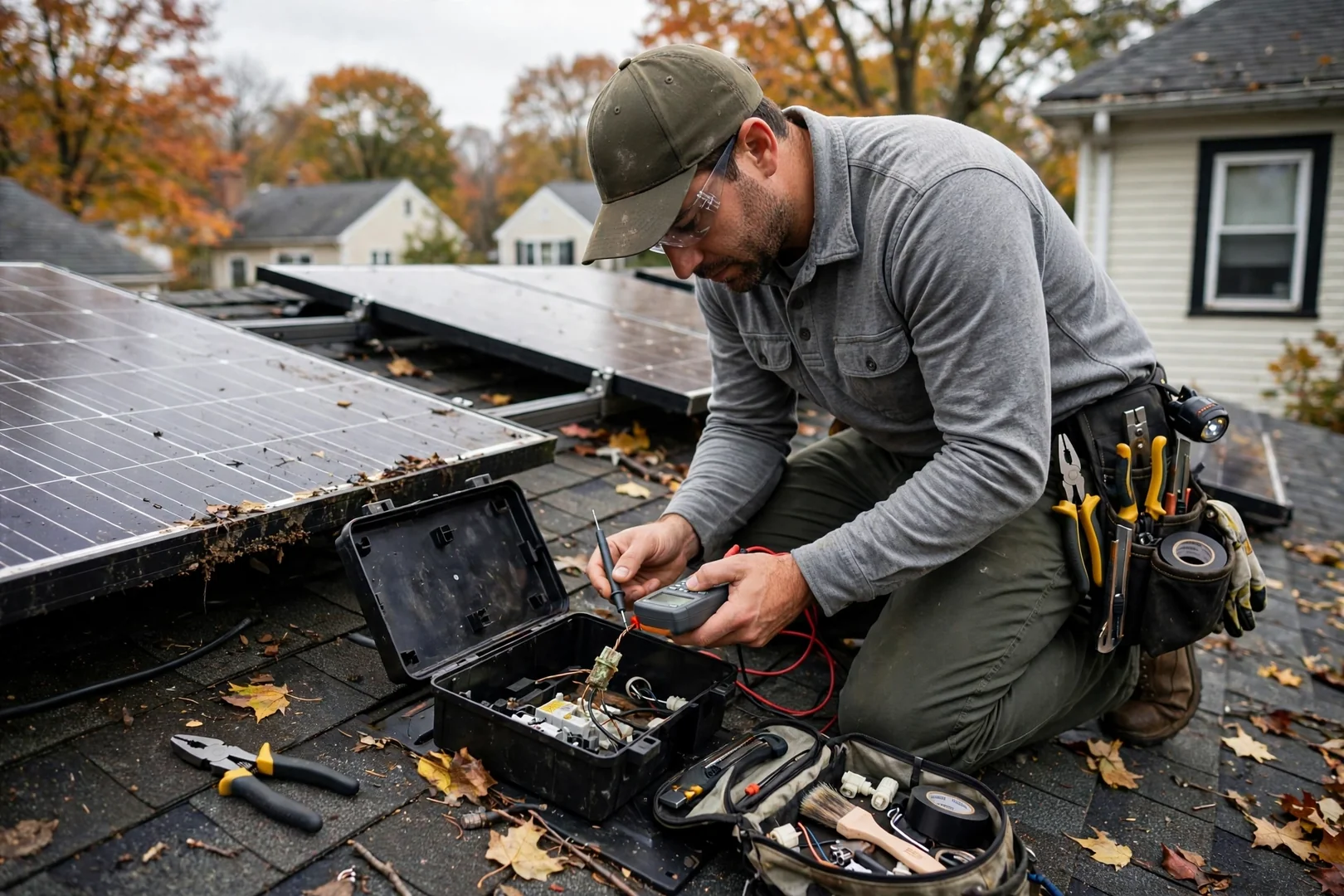
Residential solar installation pricing in Fair Lawn depends primarily on array size in kilowatts, roof condition and mounting complexity, and the electrical work needed at your service panel, with most 2026 projects falling within typical local ranges for these variables. Panel wattage and inverter choice matter as well, since microinverters and hybrid inverters carry different hardware and labor costs than a single string inverter. Roof material also shifts the number, because asphalt shingle flashing installs faster than tile, slate, or standing-seam attachments. Homes with older 100-amp service may need a panel upgrade or dedicated subpanel before interconnection, and that line item is identified during the site assessment rather than assumed.
Permit fees, structural reinforcement of rafters, conduit routing distance, and optional battery readiness round out the factors we price. Exact numbers require a walk of the roof, an attic look, and a review of your utility bill history. That is the only honest way to size a system. Every Fair Lawn homeowner we meet with receives a free written estimate itemizing equipment, labor, and permitting so nothing is discovered after work begins.
Residential Solar Installation Process
How Does Our Residential Solar Installation Process Work?
1
Site Assessment and Shade Analysis
Our residential solar installation process follows a five-step sequence built around inspection, documentation, and verified system performance. It begins with a roof and attic assessment where we measure pitch, check rafter spacing and decking condition, and run a shade analysis on surrounding trees and rooflines. Utility bills are reviewed to size the array accurately.
2
System Design and Written Estimate
Using the assessment data, we lay out the array, select panel wattage, and choose between string inverters and microinverters based on shading patterns. Electrical capacity is checked to see whether a panel upgrade is warranted. You receive a written estimate itemizing equipment, labor, and permit fees before anything is ordered.
3
Permitting and Utility Interconnection Paperwork
We prepare the plan set, structural details, and electrical diagrams required by local building officials, then file the interconnection application with your utility. Fair Lawn homes in 2026 continue to follow New Jersey inspection and net metering procedures, and we track each approval as it clears. No drilling starts before permits are in hand.
4
Installation Day and Roof Sealing
Crews stage ladders and protective coverings, locate rafters, then set flashed mounts and racking rails with sealed penetrations. Panels are secured, conduit is routed, and the inverter and monitoring equipment are tied into the service panel. Work areas are cleaned before the team leaves each day.
5
Inspection, Commissioning, and Walkthrough
After municipal inspection and utility permission to operate, we commission the system, confirm voltage and production readings, and verify monitoring is reporting correctly. A post-job walkthrough covers shutdown steps, monitoring access, and simple maintenance expectations. Documentation stays with you for warranty reference.
Trusted Residential Solar Specialists
Why Do Fair Lawn Homeowners Trust Us for Residential Solar Installation?
Fair Lawn homeowners choose us for residential solar installation because every project begins with a documented roof and electrical assessment, followed by a written estimate that spells out panel layout, inverter sizing, and mounting details before any work is scheduled. Our technicians inspect rafter spacing, flashing conditions, and existing service panel capacity first, since hidden decking damage or an undersized breaker box is often the real reason a rooftop array underperforms later. Small details matter. Flashed mounts are sealed and photographed during installation, so you have visual records of every roof penetration rather than assurances alone. After commissioning, we complete a post-job walkthrough covering monitoring access, production expectations, and the early warning signs of string or microinverter faults, then schedule a follow-up performance review. Throughout 2026 we continue applying the same diagnostic approach to shading analysis and wiring inspections that keeps systems producing steadily through Fair Lawn winters and summer heat.
Request a Written Estimate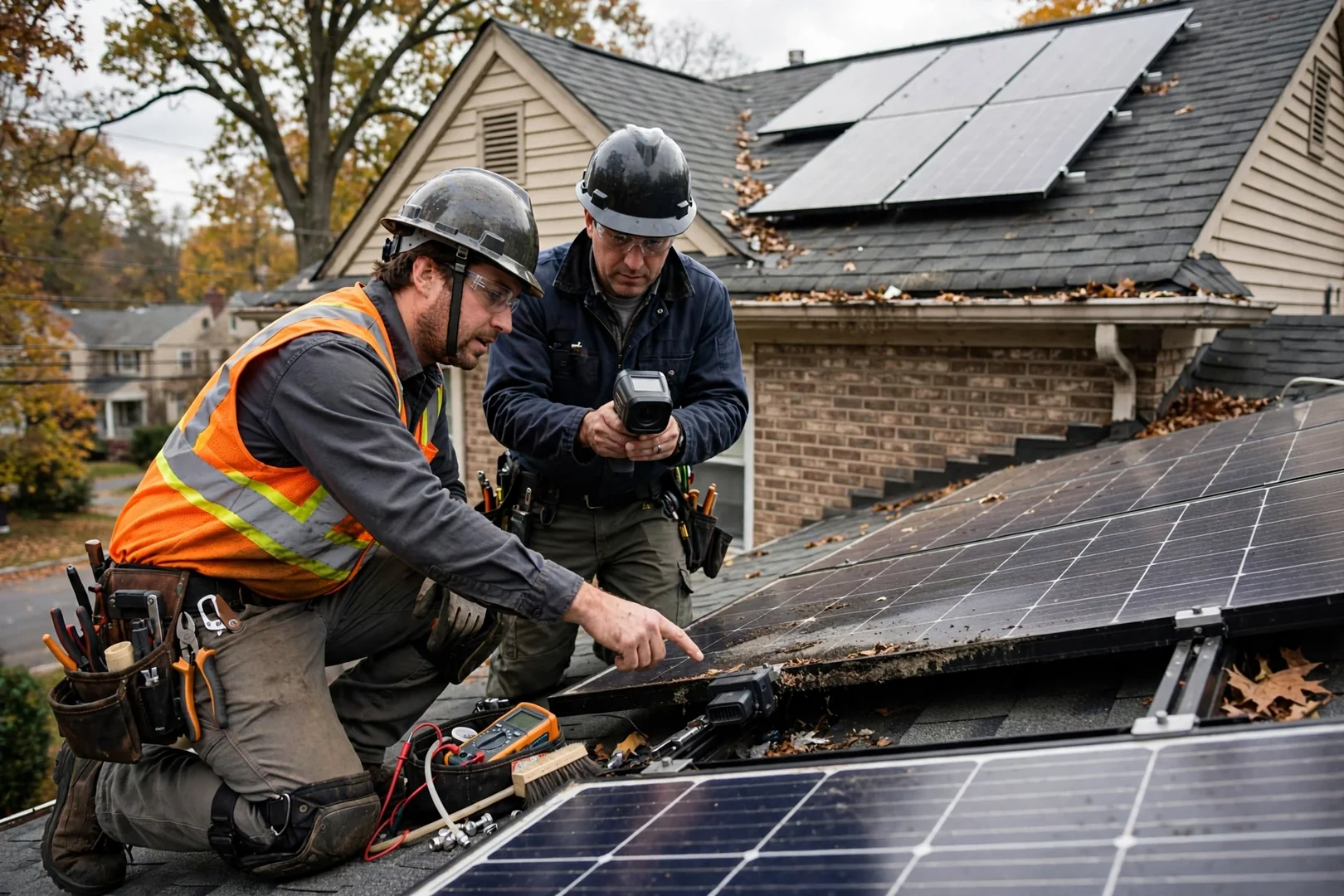
Free Residential Solar Estimates
Schedule Residential Solar Installation in Fair Lawn
Planning a rooftop system in 2026 starts with a simple site review, not a sales pitch. Our technicians measure roof pitch, shading patterns, and available rafter spans, then check your main service panel to confirm what your home can support. You receive a written estimate that lists panel counts, inverter options, and mounting details in plain language. There is no obligation to move forward.
Homeowners across Fair Lawn often reach out because production has dropped, an older array is failing, or a re-roof has made replacement the practical moment to upgrade. We look at the underlying cause first, whether that means micro-inverter faults, corroded flashing, or undersized conduit runs, so the new installation solves the problem instead of repeating it. Scheduling is organized around your roof access and utility interconnection timeline.
Call or email to request your site visit, and we will confirm an installation window that fits your calendar. Every job closes with a post-installation walkthrough, monitoring setup, and a clear explanation of what to watch for each season. Fair Lawn homes stay on our maintenance radar long after the panels go live. Reach out and we will get your assessment on the books.