Commercial solar projects are typically scheduled in stages, beginning with a rooftop load and structural review, followed by electrical service coordination and permitting before crews arrive. Because interconnection paperwork and utility approval steps run on their own timelines, we book the site assessment first and then set installation dates around those milestones. Property managers in Fair Lawn often prefer weekend or off-hours racking work to keep parking areas and loading zones clear.
Commercial Solar Installation in Fair Lawn, NJ
Commercial solar installation covers rooftop and ballasted array design for offices, warehouses, retail buildings, and mixed-use properties around Fair Lawn. Flat membrane roofs common along Route 208 corridors need careful load review, conduit routing, and three-phase inverter sizing. Our 2026 schedule is open for site assessments. Fair Lawn Solar Panel Installations handles the survey, permitting, and commissioning.
Call for A Site ReviewWe want to hear from you
Send us your details and we'll get back to you to schedule a time to talk.
What Our Commercial Solar Installation Service Includes
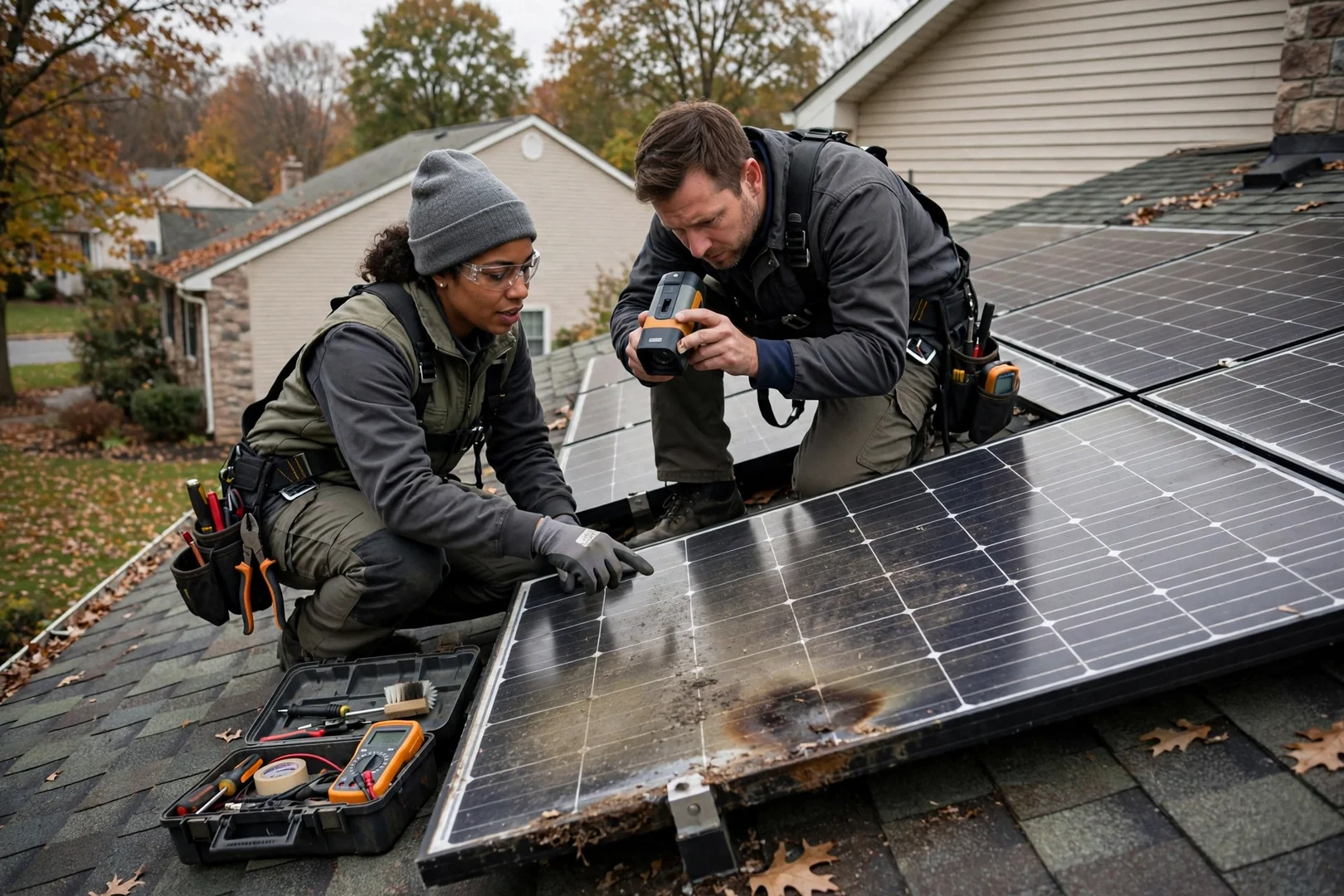
Commercial solar installation is the process of designing, mounting, and interconnecting a photovoltaic array sized for a business load profile, and at Fair Lawn Solar Panel Installations it includes shade analysis, structural review, racking layout, conduit runs, and utility interconnection paperwork across Fair Lawn properties. Work begins with a site survey where technicians measure roof planes, check membrane condition, verify penetration points, and confirm main service panel capacity. From there, string layouts and inverter selection are matched to the building’s demand curve, whether that is a small retail storefront, a multi-unit residential building, or a warehouse with long uninterrupted roof spans. Ballasted racking is often the practical answer on flat commercial roofs, while penetrating mounts with flashed standoffs suit pitched sections.
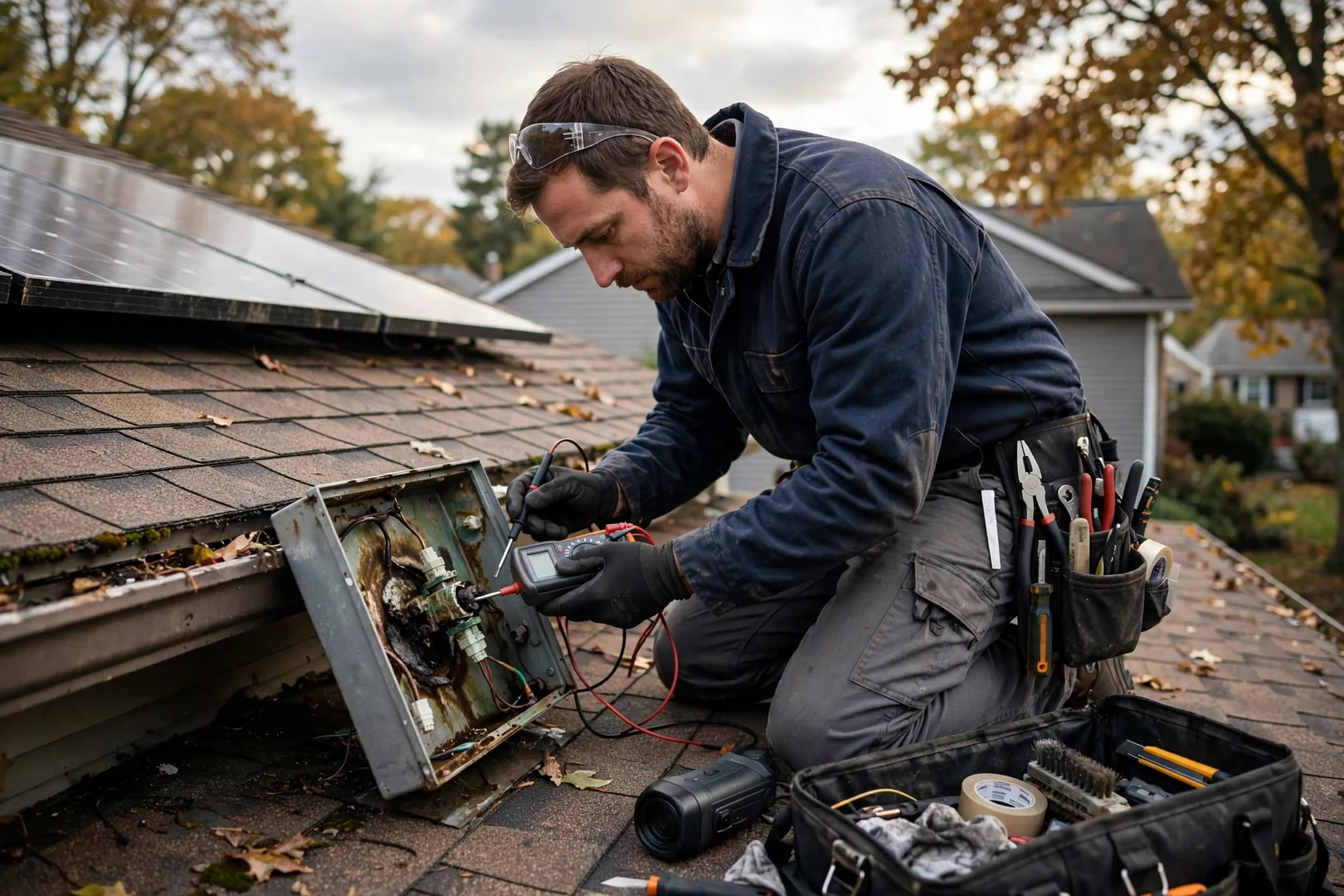
Documentation matters as much as hardware. Every project moves through written estimates, permit submission, inspection coordination, and a post-job walkthrough where output readings and monitoring access are reviewed with the owner. Throughout 2026 we are also seeing more Fair Lawn property managers ask for expansion planning on existing arrays, so conduit and inverter capacity are sized with future strings in mind. Small details prevent large problems later. Loose MC4 connectors, undersized grounding, and unsealed penetrations are the underlying causes behind most performance complaints and water intrusion calls, which is why our crews torque, label, and test each circuit before commissioning.
Related Solar Services
Common Commercial Solar Issues
What Signs Mean Your Property Needs Commercial Solar Installation?
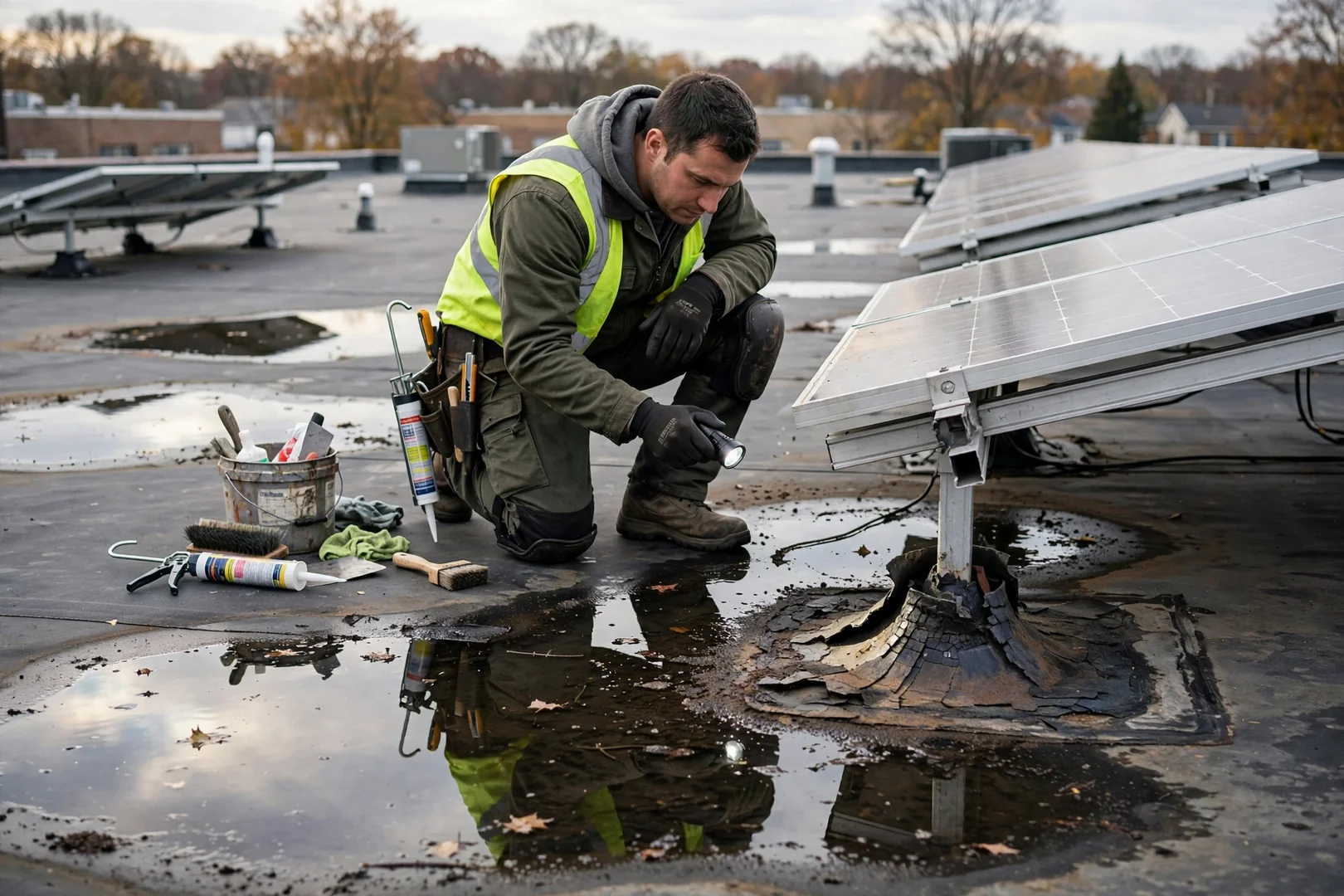
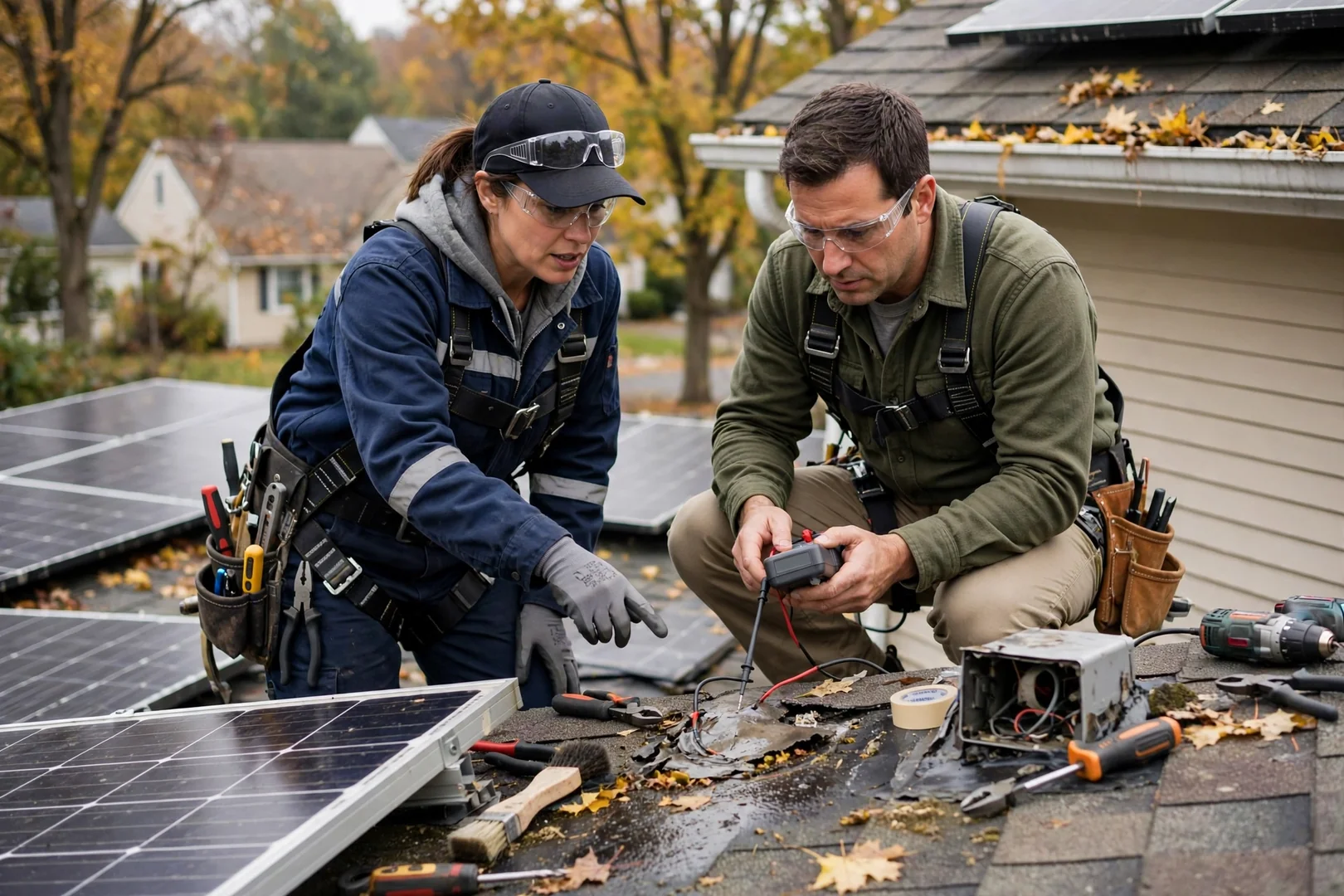
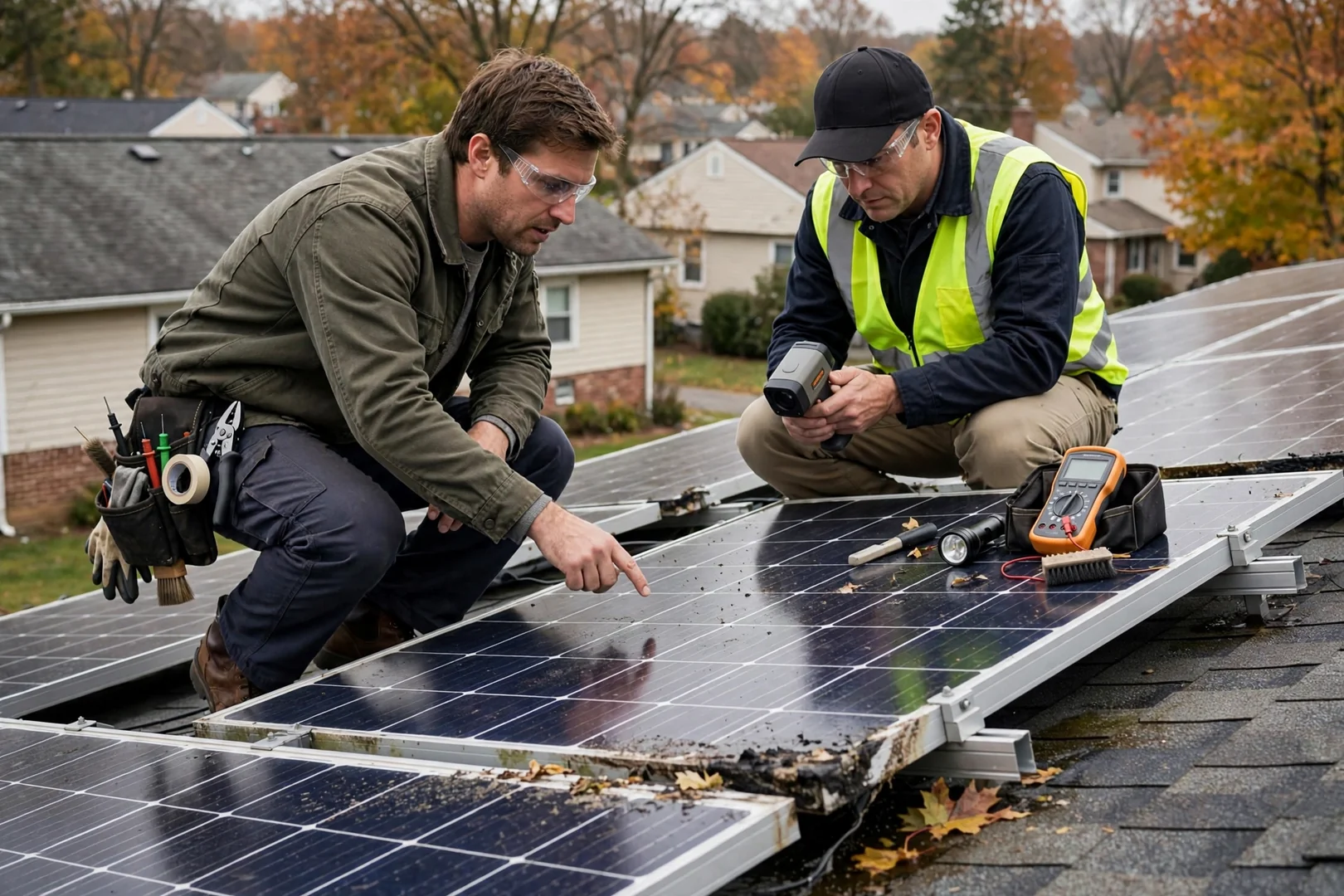
Rising demand charges, aging rooftop equipment, and unused roof area are the clearest signs a Fair Lawn commercial property is ready for a solar installation or a system rebuild. Owners usually reach out after noticing a few specific symptoms: monthly peak demand fees climbing faster than usage, an older string inverter cycling into fault mode during afternoon heat, or monitoring reports showing individual strings underproducing while neighboring arrays hold steady. On flat membrane roofs, another common finding is ponding around unflashed penetrations from earlier low-quality mounting work, which slowly leads to seam separation and interior moisture staining. Shading from new construction, tree growth, or rooftop HVAC curbs also drags output down in ways a quick production check will reveal. Winter snow load and the freeze-thaw cycles that follow tend to expose weak racking clamps and loose grounding lugs, and by early 2026 those issues typically show up as intermittent arc-fault trips. Diagnosis comes first. A properly engineered commercial installation resolves these problems at the root by correcting array layout, upgrading inverter capacity, sealing every penetration, and documenting the results during a post-job walkthrough.
Call Us On: (551) 766-1497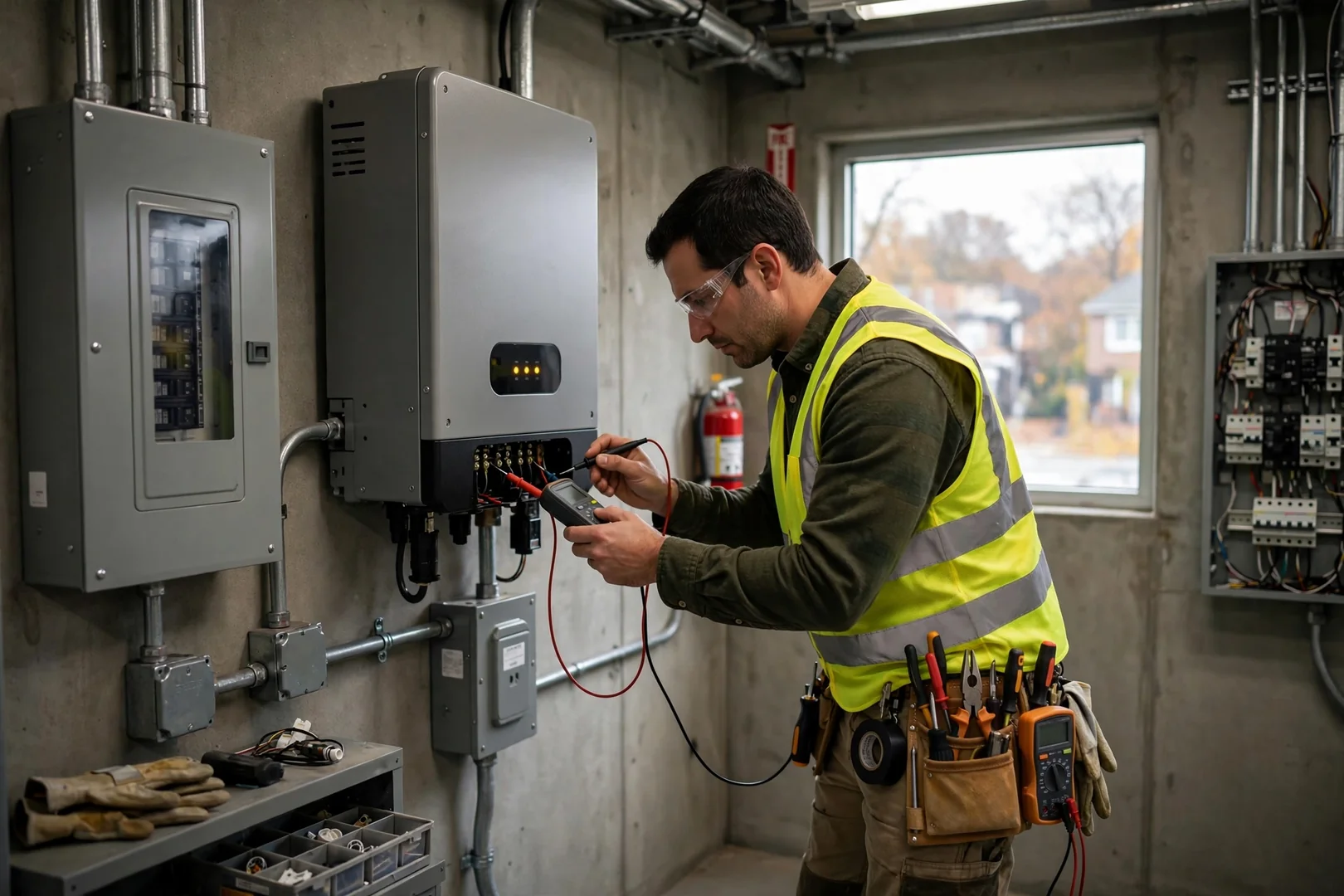
- Commercial Solar Installation FAQs -
Frequently Asked Questions About Commercial Solar Installation in Fair Lawn
Click Me to Call: (551) 766-1497A commercial installation includes the mounting system, PV modules, string or central inverters, conduit runs, disconnects, production monitoring, and the interconnection tie-in at your main service panel. We also handle permit drawings, structural attachment details, and the labeling required for a passed inspection. Before the crew leaves, we complete a post-job walkthrough and provide written documentation of the array layout and commissioning readings.
Preparation is usually limited to clearing roof access, staging space for equipment, and confirming when the electrical room can be reached for the interconnection work. We ask for a contact who can approve brief power interruptions during inverter and disconnect wiring, and we mark off the material staging area in advance. Fair Lawn businesses along busier commercial corridors sometimes need a parking plan for the boom lift, which we arrange during the pre-installation review.
Pricing on a commercial array is driven by system size in kilowatts, mounting type, inverter configuration, and the amount of electrical upgrade work needed at the service panel. Ballasted racking on a flat membrane roof prices differently than penetrating attachments on a standing seam or built-up roof. We measure and document the site first, then issue a free written estimate so the numbers are tied to your building rather than an average.
Local snow loading, wind exposure, and shading from nearby buildings or mature trees all shape the racking layout and module spacing on North Jersey commercial roofs. During 2026 site assessments, our technicians check membrane condition, parapet heights, and drainage paths so the array does not interfere with roof performance. Flat-roof buildings throughout Fair Lawn frequently benefit from tilted ballasted racking, which improves winter production without added penetrations.
How Much Does Commercial Solar Installation Cost in Fair Lawn?
Commercial solar installation pricing in Fair Lawn depends primarily on system size in kilowatts, mounting method, inverter configuration, and the extent of electrical service upgrades, with most 2026 projects priced after a documented site assessment. Roof type matters a great deal, since ballasted racking on a flat membrane costs differently than penetrating attachments or a ground-mounted foundation. Inverter selection is another factor, as string inverters, central inverters, and module-level optimizers each carry different equipment and labor requirements. Panel capacity, conduit routing distance, and any needed switchgear or subpanel work also shift the total.
Permitting and interconnection coordination add measurable engineering time on larger arrays, especially when structural stamping is requested. Shading studies can change module counts. Exact figures always require a walkthrough of the roof, electrical room, and service entrance, because two similar Fair Lawn buildings rarely share the same conditions. Every project begins with a free written estimate that itemizes equipment, labor, and permit scope so nothing is left to assumption.
Commercial Solar Installation Process
How Does Our Commercial Solar Installation Process Work?
1
Site Assessment and Energy Review
Our process begins with a walkthrough of the roof, electrical room, and service entrance. We record membrane condition, parapet height, available roof area, and existing panel capacity, then review twelve months of utility usage to size the array in kilowatts.
2
System Design and Written Proposal
Next, we produce an array layout with module counts, racking type, and inverter configuration matched to your building. A shading study informs row spacing. You receive a written estimate that itemizes equipment, labor, and permit scope before anything is ordered.
3
Permitting and Interconnection Coordination
We prepare permit drawings, structural attachment details, and single-line electrical diagrams for local review, then submit the interconnection application to the utility. Fair Lawn commercial properties sometimes require added structural documentation, which we assemble so approvals move forward without repeated resubmittals.
4
Installation and Electrical Tie-In
Crews stage materials, set the racking or ballast trays, mount modules, and run conduit to the inverters and disconnects. The interconnection tie-in at the main service panel is scheduled around your operating hours so power interruptions stay brief and predictable.
5
Commissioning, Inspection, and Walkthrough
Finally, we test string voltages, verify inverter startup, confirm monitoring communication, and accompany the inspector through the site. A post-job walkthrough covers array layout, monitoring access, and maintenance expectations, along with written commissioning readings for your records.
Trusted Commercial Solar Specialists
Why Do Fair Lawn Businesses Trust Us for Commercial Solar Installation?
Property owners choose Fair Lawn Solar Panel Installations for commercial solar installation because every project begins with a diagnostic roof and electrical assessment, followed by a written estimate that lists array layout, inverter capacity, and conduit routing before any mounting hardware is set. Our technicians start by checking membrane condition, parapet clearances, and existing service panel load, since undersized breakers and poor flashing details are the two issues that most often lead to leaks or production shortfalls later. Ballasted and penetrating racking systems each get torque-checked, and string voltages are verified with a clamp meter and irradiance reading before commissioning. We photograph penetrations, junction boxes, and conductor terminations so you have documentation if a warranty question ever comes up. A post-job walkthrough covers monitoring access, expected output ranges, and how to spot early warning signs such as one string reporting low. Scheduled follow-up inspections in 2026 include panel soiling checks and fastener retorquing, which keeps small performance issues from turning into equipment failures. Fair Lawn roofs and winter loads are familiar ground for us.
Contact Us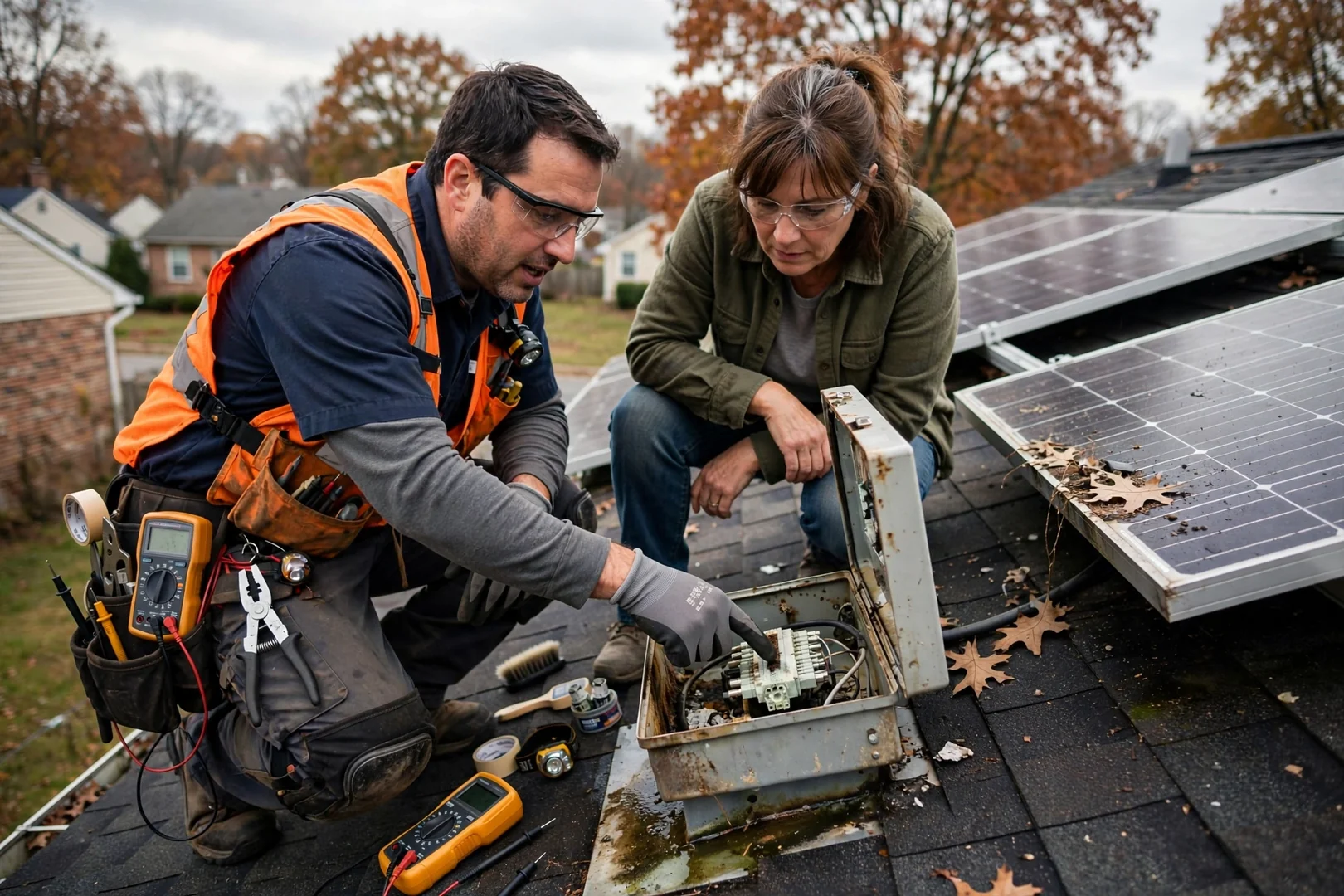
Free Commercial Solar Estimates
Schedule Commercial Solar Installation in Fair Lawn
Planning a commercial array for your Fair Lawn property starts with a straightforward site review, not a sales pitch. Our technicians walk the roof or ground area, check structural conditions, review your existing electrical service and panel capacity, then document what a practical system would look like for your building. You receive a free written estimate covering module layout, inverter selection, and expected production figures.
There is no obligation attached to that estimate. If the numbers do not work for your 2026 budget or your operating plans change, the file simply stays open until you are ready. Many Fair Lawn business owners compare options for weeks before moving forward, and that pace is completely fine with us.
Scheduling stays simple. Call or email to reserve an assessment window that fits around your business hours, and we will confirm the details in writing before anyone arrives. Once you approve the design, we handle permitting paperwork, utility interconnection forms, and a post-job walkthrough so nothing sits unexplained. Reach out today and put your commercial solar plan in motion.